Hearing affects how you connect, learn and stay safe. If you are noticing changes in your or your child’s hearing, or want to protect the hearing you have, these resources can help.
There is a wealth of information about hearing health online, but not all of it is accurate or comprehensive. The information on our website has been thoroughly reviewed by our team. If you have any questions about what you find here, other online sources, or hearing health in general, please feel free to email aparc@purdue.edu.

Signs You May Want to Have Your Hearing Tested
These are signals in your day-to-day life that may indicate that you should have your hearing tested:
- You find yourself asking for others to repeat what they are saying.
- You need to turn the volume up on your TV, radio, or phone.
- You notice ringing in your ears.
- You find yourself misunderstanding what is being said to you.
- You have difficulty following conversation, especially in noisy environments.
- You feel fatigued after attending an event where you spent most of your time trying to have conversations.
- You feel as though people are mumbling when they speak to you.
- You have a hard time locating sounds around you.
I am concerned about my child’s hearing
For children, hearing is essential for speech, language, and social and learning development. Identifying hearing concerns early can help make sure children get the support they need to reach their full potential.
Watch for these developmental milestones, which have been adapted from The Children’s Hospital of Pennsylvania.
By 0-3 months, babies should:
- Startle or awake to loud sounds
- Calm to soft, familiar sounds
- Turn their head to new sounds
By 4-6 months, babies should:
- Look toward new sounds
- Enjoy toys that make sounds
- Be scared of loud noises/shouting
- Begin to repeat sounds
By 7-12 months, babies should:
- Look at items being talked about
- Respond to their name and other sounds like a phone ringing
- Respond to short requests like, “Come here”
By 1-2 years, toddlers should:
- Have a growing vocabulary, knowing more words as each month passes
- Point to body parts correctly when asked
- Follow two-step commands
Warning signs to look for
Baby
- Not startling to loud noises
- Not responding to familiar voices
- Limited babbling
- Not imitating sounds
Toddler
- Not following simple instructions
- Turning electronics up very loud
- Speaks very few or no words
Preschooler/school-age child
- Has difficulty understanding speech
- Asks for repetitions frequently
- Does not seem to be paying attention and has difficulty following instructions
Next steps if you think your child may have hearing loss
- Schedule an appointment with your child’s pediatrician and bring up your concerns. Often, the pediatrician can do a hearing screening in the office.
- If your child is 0-3 years old, contact your state’s early intervention provider. In Indiana, it is First Steps. It can provide developmental evaluations in a child’s home or another familiar environment.
- If your child is in school, ask your child’s teacher if they have similar concerns. You can have the teacher fill out an observation form similar to this example.
- Contact an audiologist, who is a hearing specialist. It is important to find a provider who is comfortable testing children, especially if your child is under 5, as many younger children require special testing methods.
My child has hearing loss, and I need support
Please know that you are not alone and that there are support systems in place to help parents of kids with hearing loss. Often, your child’s audiologist will have resources specific to your area.
Hands and Voices is a nonprofit parent-support group with chapters in most states.
When You Should Also See a Medical Provider
The Food and Drug Administration (FDA) has identified several “red flag” conditions related to hearing. If you have any of these conditions or symptoms, it is recommended you see a medical physician in addition to an audiologist.
A sudden hearing loss. If you have a hearing loss that comes on suddenly with no known cause this is considered a medical emergency. If you cannot get an appointment with your primary care physician or an ear, nose and throat specialist, you should be seen at an urgent care center or in an emergency room. Sudden hearing loss can be treated in some cases, but only if action is taken within the first few days after onset.
- Active drainage coming from your ears. This includes blood, pus and anything coming from your ear that is not wax.
- A foreign body in your ear. This means something is in your ear other than ear wax or water. This will have to be removed by a medical provider before seeing the audiologist for a hearing test.
- Dizziness. Though some forms of dizziness can be caused by issues in your ear, it is important to rule out other causes of your dizziness.
What Happens During a Hearing Test?
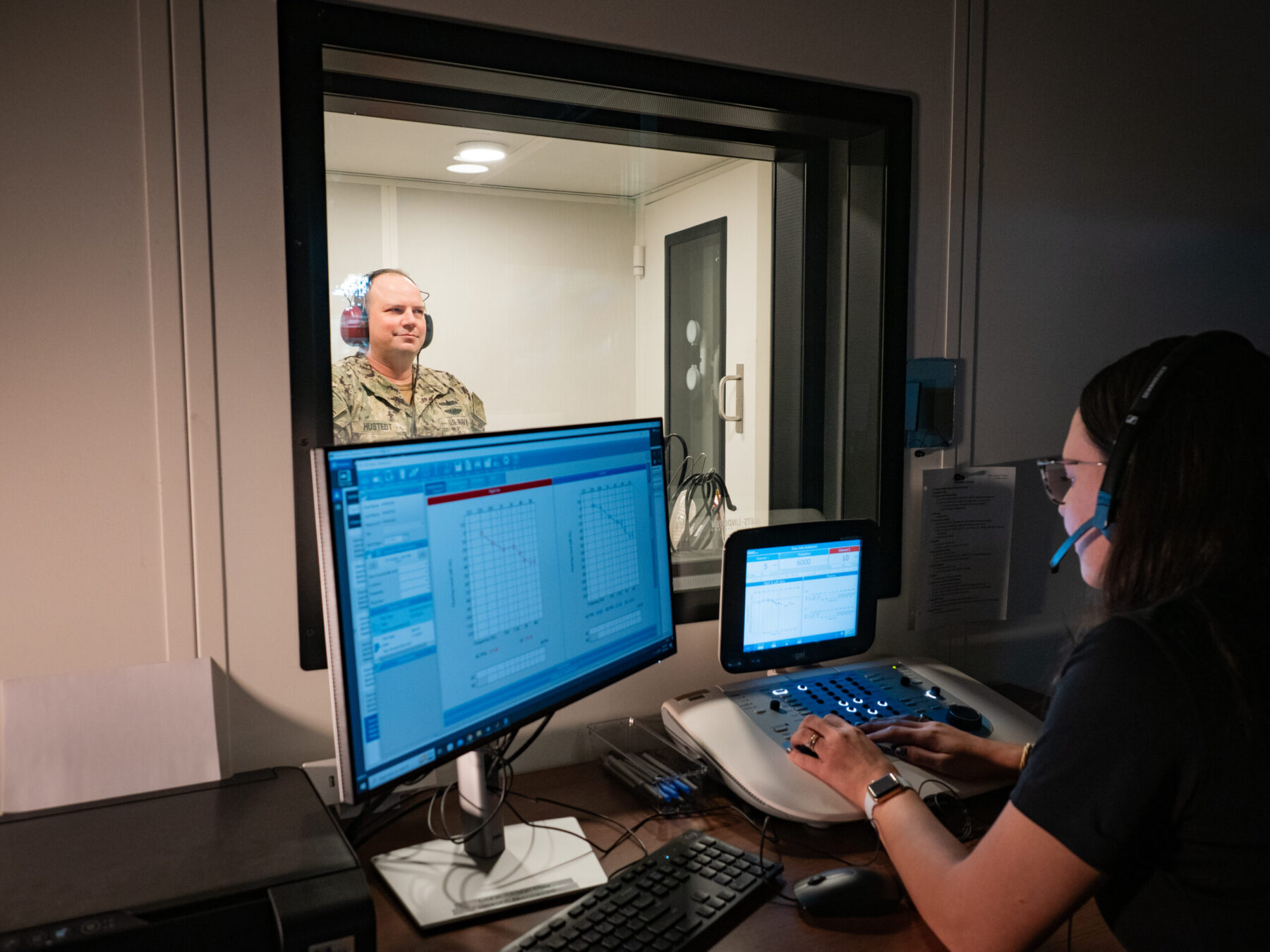
When you have your hearing tested, the hearing care professional will conduct a variety of tests, each providing information about a specific aspect of your hearing system. They will look at all your results together to determine a diagnosis and a specialized treatment plan for you. If you have any questions about how to interpret your hearing test, please feel free to email aparc@purdue.edu, or visit us in person at 1220 Waterway Blvd., Suite H120, Indianapolis.
Understanding Your Hearing Test
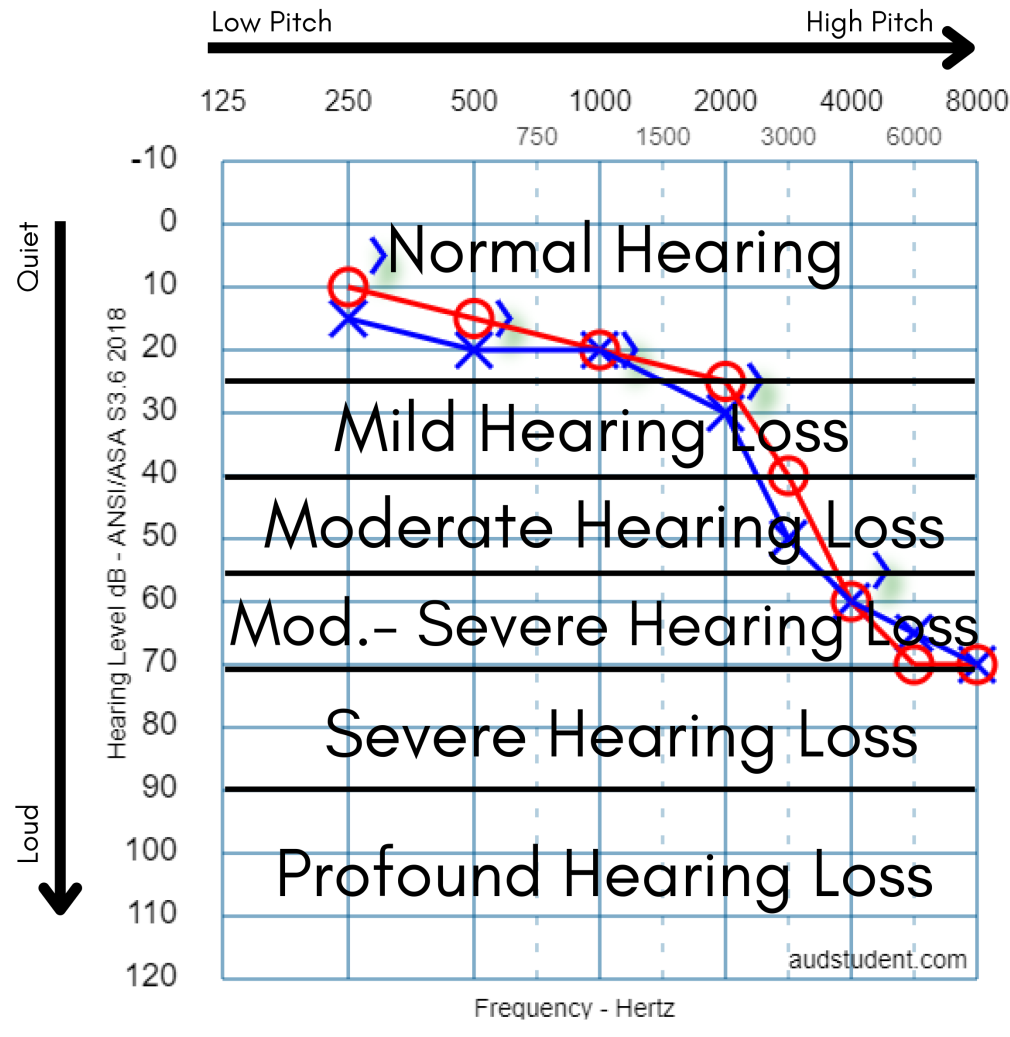
The audiogram displays the softest tones you can hear at different pitches. The closer to the top of the chart the symbols are the quieter the tone could be and you could still detect it. If the symbol is further down the chart it means the tone had to be loud for you to hear it. X is the left ear. O is the right ear.


Understanding Hearing Loss
There are three types of hearing loss you may be diagnosed with:
Diabetes and Hearing Loss
Hearing Protection
Protect your ears during loud events by wearing hearing protection. Any properly worn hearing protection is helpful and can be purchased for less than $5.
Though slightly more expensive, special earplugs for musicians, which are designed to keep the quality of the music unchanged with them in, are also available. View a recommended pair.
How to effectively wear hearing protection
Using hearing protection properly can significantly reduce noise levels and the chances of damaging your ears. This video provides guidance on how to properly insert earplugs.
The image below from Mack’s Earplugs explains steps for properly inserting earplugs.
- Step 1: With clean hands, roll the plug into a tight, crease-free cylinder.
- Step 2: With the opposite hand, reach over your head and pull back on the outer ear to straighten the ear canal.
- Step 3: Quickly insert the earplug well into the ear canal and hold it in place until it expands for a comfortable, secure fit.
- Warning: Improper fitting will reduce effectiveness, which could result in hearing loss.

Hearing aids
Visit our hearing health page to learn more about hearing aids. We also recommend visiting Hearing Tracker for trusted hearing aid reviews.
Hearing Aids & Other Hearing-Care Resources
There is a significant amount of information about hearing aid choices available online. However, not all this information is accurate. We recommend verifying the sources of online hearing-aid information. Listed below are reliable sites that provide unbiased information on a variety of hearing-aid topics.
Additional financial assistance
Tinnitus: Ringing or Other Sounds in the Ears
Research indicates that 11.2% of people in the United States have tinnitus or ringing in the ears. For some, this is infrequent and not bothersome; for others it can affect day-to-day life and ability to sleep. While there is no known cure for tinnitus, there are many treatment options available.
- The American Tinnitus Association has great information about tinnitus, current treatments available and support groups.
- If you are having thoughts about ending your life due to your tinnitus, or any other reason, please call 988.
Print & Share Resources
Free hearing-health materials for your community
Download APARC flyers, posters, and educational materials to print and share in clinics, schools, community centers, events, and other settings.
Need printed copies?
Request Printed Materials